Basis Lab

The mathematics underneath

Work with quantities that span many orders of magnitude without losing your footing, by deriving what a logarithm answers, why it turns multiplication into addition, why nearly every score in machine learning is the log of something, and how to read a chart whose axis has been squashed

Logarithms, Growth and Scale
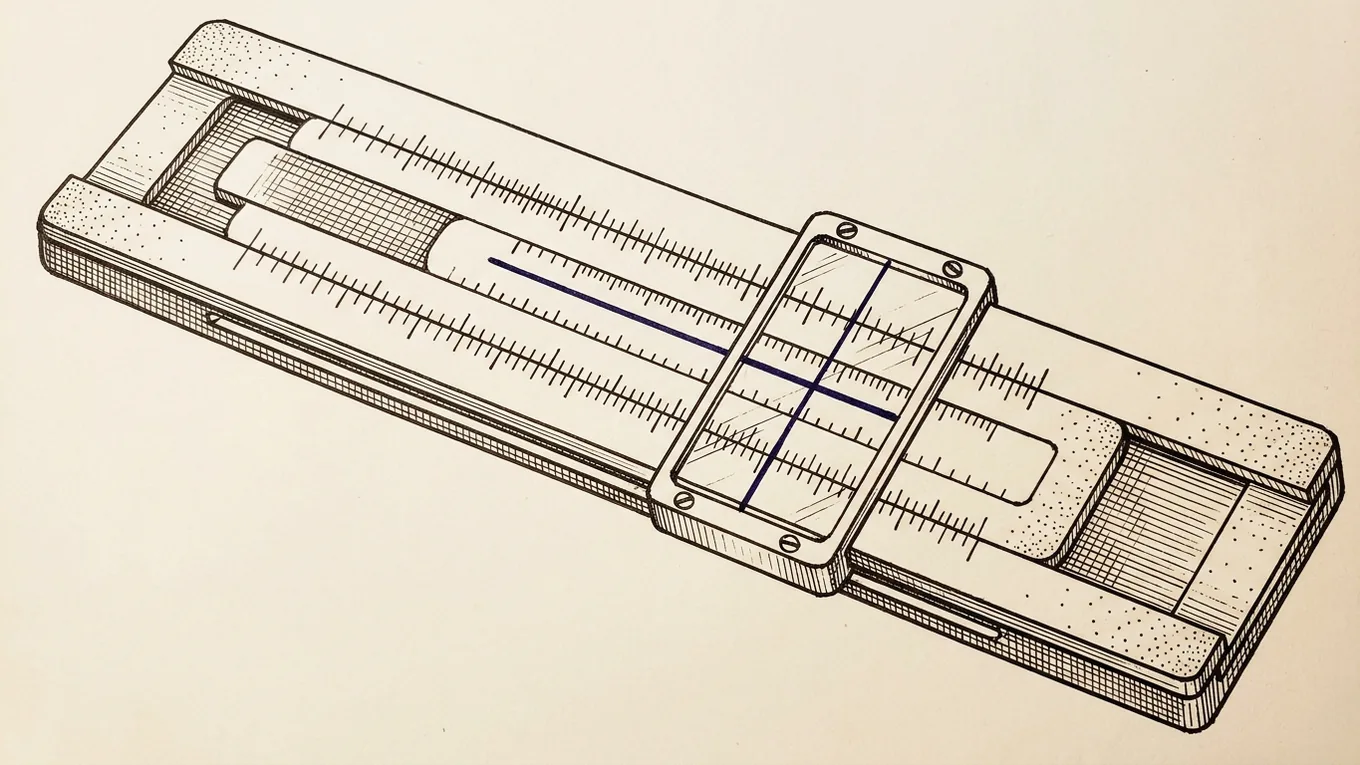
Doubling, halving, orders of magnitude and the log scale. The one piece of school mathematics that the rest of this library uses on every page, derived rather than recalled.

8 lessons, written and corrected before you arrived. Reading them here needs no account. The first reads the whole way through; the others open and then stop, because a page nobody owns cannot tell who is reading it. Starting the course gives you your own copy, where every idea has problems standing under it and you can ask about any sentence.

Start reading

This is course 2 of 8 in a reading track: read any page here without stopping at the symbols. The track is an order, not a gate, and the rest of it is on one page.

  1. 01Growing by MultiplyingGrowth that adds a fixed amount and growth that multiplies by a fixed factor behave nothing alike. Telling them apart, and computing a doubling time, is the whole of this page.
  2. 02The Question a Logarithm Answersopening onlyA logarithm is the exponent you needed, and nothing else. Reading every log expression back as that question is the whole technique, and it removes the need to remember any rule.
  3. 03Multiplication Becomes Additionopening onlyThree rules turn products into sums, quotients into differences and powers into multiples. All three are exponent rules wearing a disguise, and deriving them once is cheaper than remembering them.
  4. 04Two, Ten, and the Awkward Oneopening onlyEvery logarithm is the same curve with a different ruler. Which base a paper means is a matter of field rather than mathematics, and converting between them is one division.
  5. 05A Chart With a Squashed Axisopening onlyOn a logarithmic axis equal distances are equal factors, not equal amounts. Reading one correctly turns growth into a slope, and misreading one is how charts mislead honestly.
  6. 06Why Every Score Is a Log Probabilityopening onlyMultiplying a thousand probabilities gives nought on any real computer. Adding their logarithms gives the same quantity and survives, which is why nearly every score in the subject is a log.
  7. 07What Decays, and How Fastopening onlyA quantity that multiplies by less than one each step is the same mathematics upside down. Half life and continuous rate are two names for the same number, and every schedule is built from them.
  8. 08Thinking in Orders of Magnitudeopening onlyAn answer to within a factor of ten is cheap, fast and usually enough to make a decision. The method is a product of guesses, and the arithmetic that makes it reliable is addition in log space.