The library

The mathematics underneath

Be able to say why a model that fits its training data might still be useless, judge a reported result by how it was measured, and explain what capacity, regularisation and more data each actually do

Why Learning Works At All
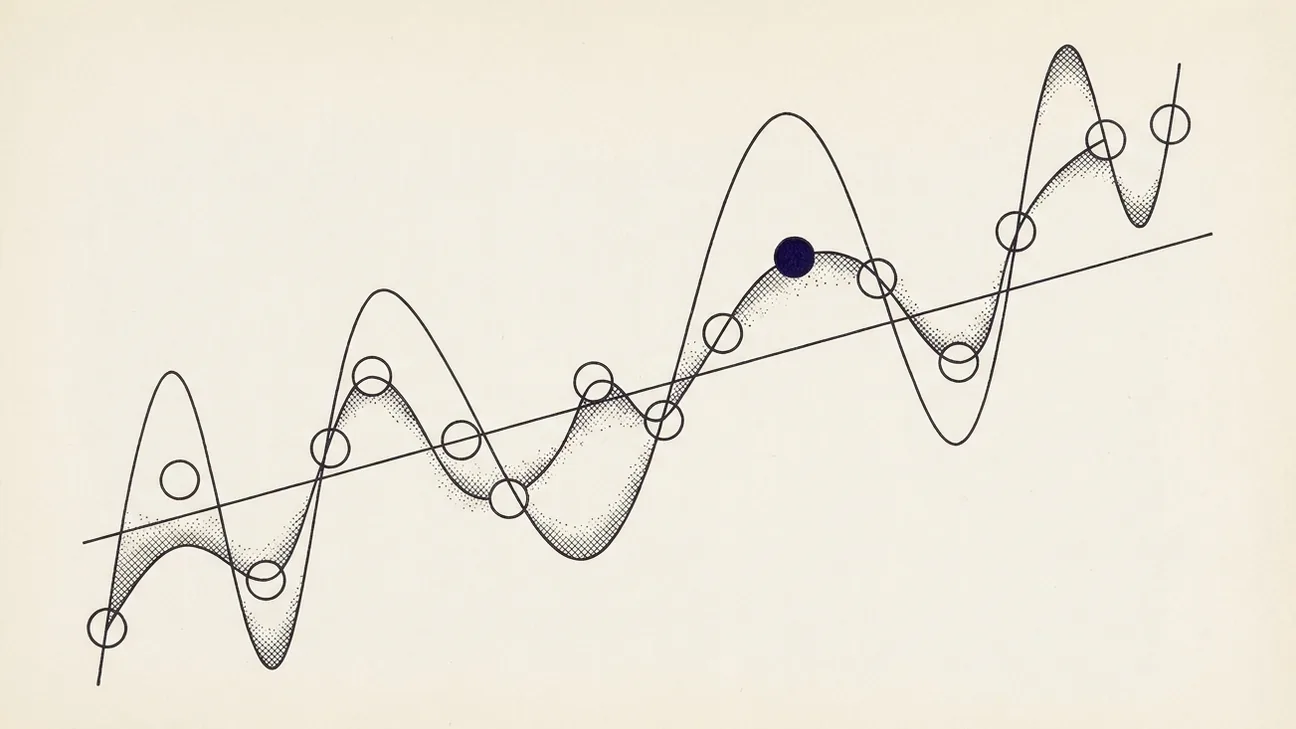
Nothing guarantees that doing well on examples you have seen means doing well on examples you have not. This course is about why it usually does anyway, when it does not, and how to tell the difference before it costs you.

8 lessons, written and corrected before you arrived. Reading them here needs no account. The first reads the whole way through; the others open and then stop, because a page nobody owns cannot tell who is reading it. Starting the course gives you your own copy, where every idea has problems standing under it and you can ask about any sentence.

Start reading

  1. 01The Number That Proves NothingA model can score perfectly on the examples it was trained on without having learned anything, so training performance is not evidence and something else has to be measured.
  2. 02The Measurement And How It Breaksopening onlyHolding examples back measures what you want only if they truly had no influence, which fails through leakage, through reuse, and through splitting on the wrong unit.
  3. 03The Word That Settles The Argumentopening onlyCapacity is the variety of patterns a model could express, and the parameter count is a surprisingly poor way to measure it.
  4. 04The Curve In Every Textbookopening onlyError on new data breaks into a part from being too rigid and a part from being too sensitive, and the two move in opposite directions as capacity grows.
  5. 05Charging For The Wrong Answersopening onlyEvery way of fighting overfitting is the same move, which is making some settings expensive so that the data has to insist before they are reached.
  6. 06The Lever With No Downside, Almostopening onlyMore examples reduce sensitivity without adding rigidity, but the gain follows a curve that flattens, and only one of the two failure modes responds at all.
  7. 07Past The Point Where It Should Breakopening onlyError rises to a peak where a model has just enough capacity to fit the training data exactly, and then falls again as capacity grows past it.
  8. 08The Honest State Of The Answeropening onlyPart of why very large models generalise is understood, part is conjecture with good evidence, and the remainder is genuinely open.